Across Staffordshire, one of the most common yet overlooked roofing problems we encounter is damage caused by birds nesting at the eaves of a property. While birds may seem harmless, their activity around the roofline can quietly compromise the roofing felt, allowing water to enter areas of the structure that were never designed to handle moisture. Over time, this can lead to saturated cavity walls, damp internal plaster, and persistent mould growth inside the home.
Many homeowners only discover the issue once internal damp patches appear, but by that stage the damage has often been developing for months or even years.

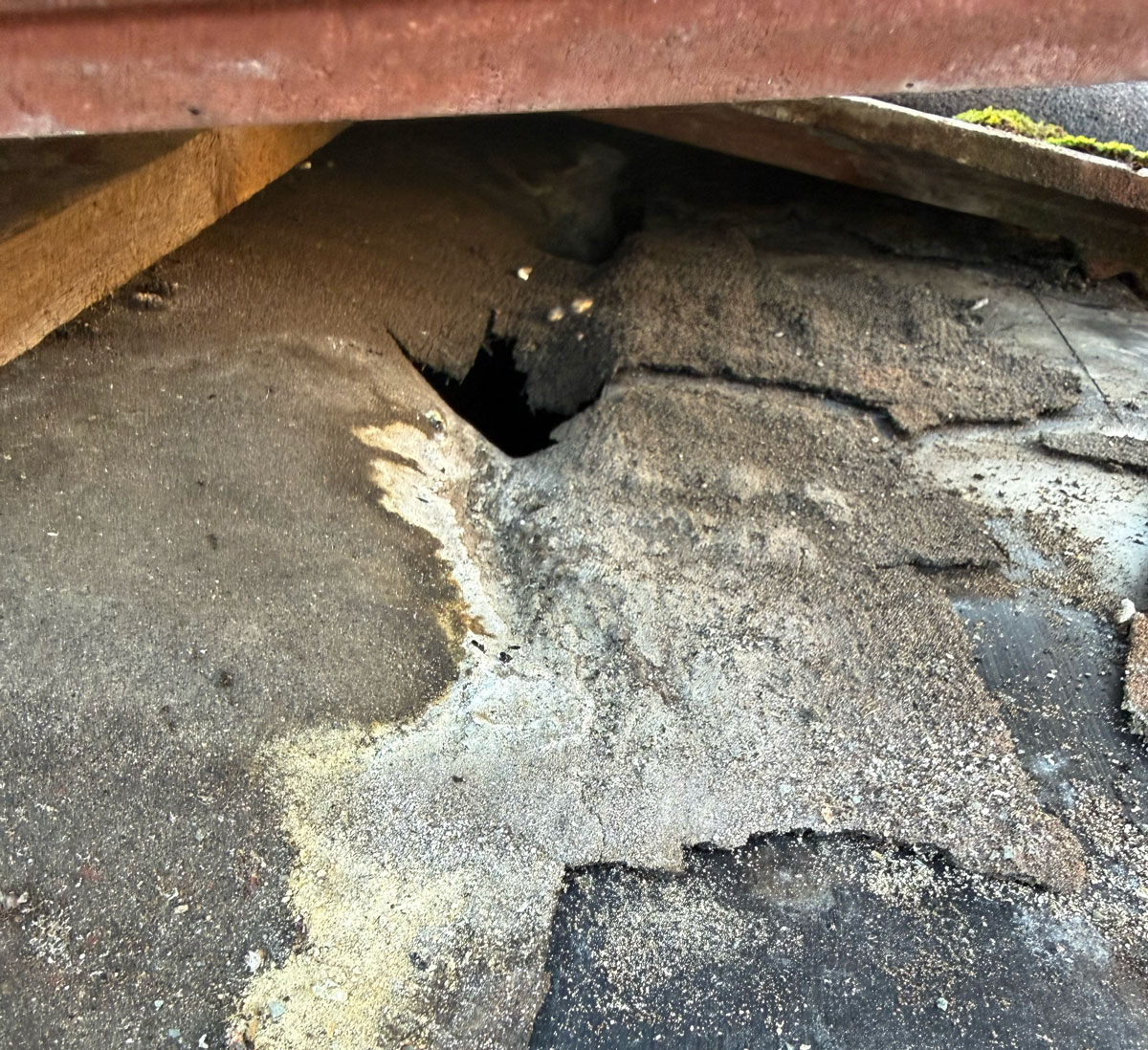
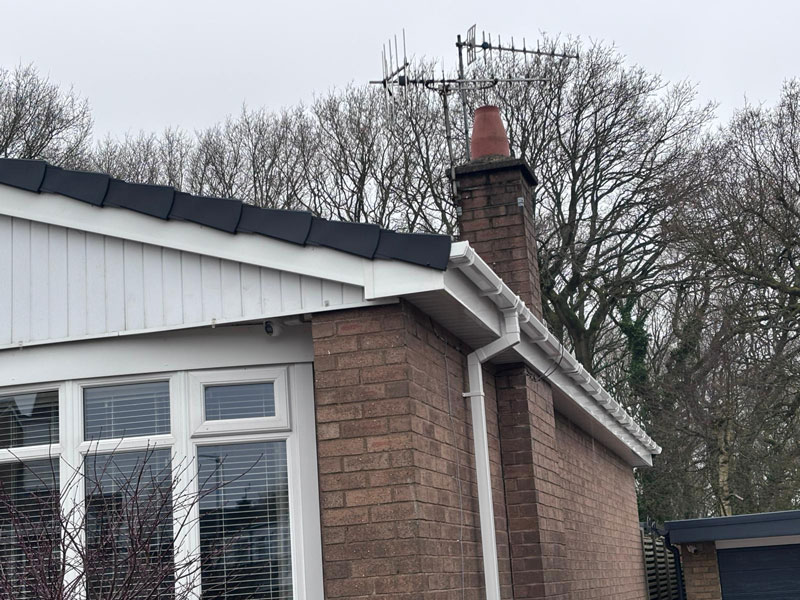
Here the old style bitumen roofing felt has perished. Often caused by house sparrows whom nest in the eaves under the roof tiles. The damage is directly above the cavity wall, so water ingress was present. During heavy storms, rainwater will inevitably reach the roofing felt and in this instance, water will enter the cavity and cause brick saturation and damp because the clear path to the gutter is diminished.
Why the Eaves Area Is Vulnerable
The eaves are the lowest edge of the roof where it meets the guttering. This area plays a critical role in directing rainwater safely away from the property. Beneath the tiles at the eaves sits roofing felt (underlay), which extends into the gutter to ensure any water that passes under the tiles drains externally rather than into the building.
Because this section of the roof is slightly open for ventilation, it creates an attractive entry point for birds seeking warm, sheltered nesting spaces.
Common culprits include sparrows, starlings, and pigeons — all frequently found nesting in residential rooflines throughout Staffordshire.
How Birds Gain Access to the Roofline
Birds typically enter through small gaps that form over time due to:
- Missing or damaged fascia boards
- Deteriorated soffits
- Lifted or uneven roof tiles
- Lack of eaves protection systems
- Ageing roofing felt that has begun to sag
Once a small opening exists, birds repeatedly return, enlarging the gap through pecking, pulling, and nesting activity.
The Hidden Damage Birds Cause to Roofing Felt
Roofing felt is designed to act as a secondary waterproof barrier, but it is not built to withstand constant disturbance.
When birds nest at the eaves, they often:
- Peck and tear the felt to create entry points
- Pull fibres apart to use as nesting material
- Compress or displace felt through repeated movement
- Create holes where water can freely enter
In older properties especially, traditional bitumen felt becomes brittle with age. This makes it extremely easy for birds to rip through, leaving exposed openings directly into the roof structure.
Once torn, the felt can no longer guide water safely into the gutter system.
How Water Reaches the Cavity Wall
During rainfall, water naturally travels beneath roof tiles due to wind pressure and capillary action. Normally, intact roofing felt catches this moisture and channels it outward.
However, when felt is damaged at the eaves, water drops directly behind the fascia and into the top of the wall cavity.
This is where serious problems begin.
Instead of draining away harmlessly, rainwater enters the cavity space between the inner and outer brickwork. Because this area is enclosed and poorly ventilated, moisture becomes trapped.
Repeated rainfall leads to gradual water accumulation inside the wall structure.

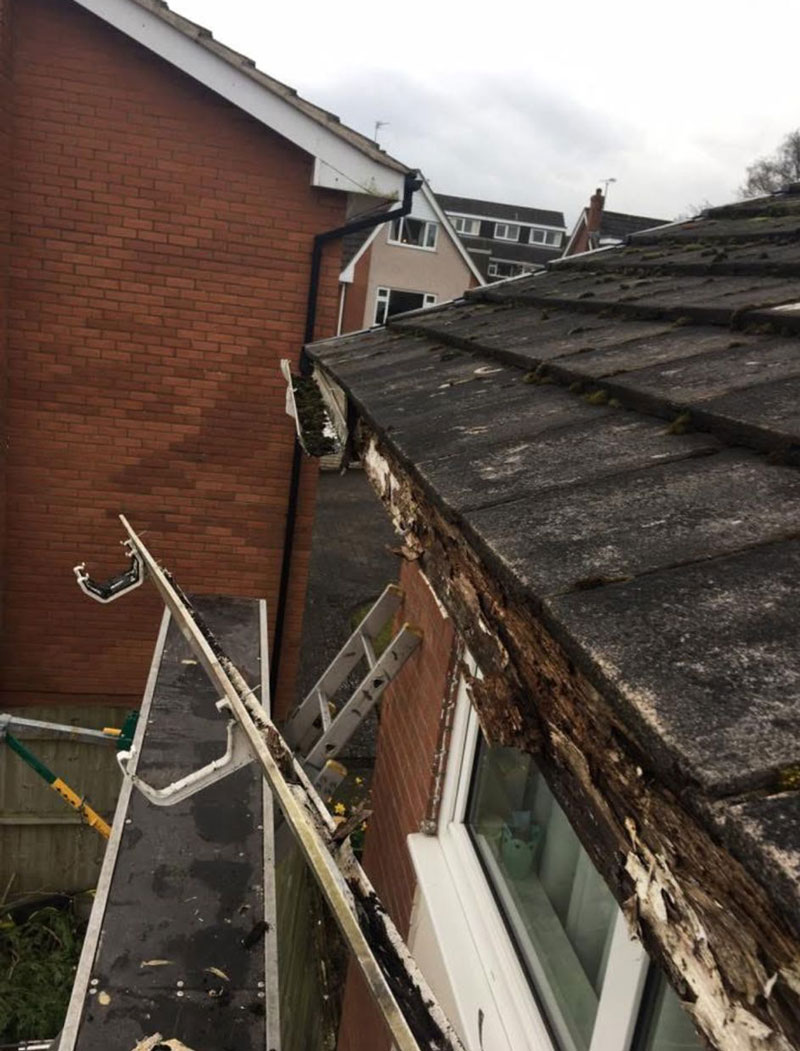
Here the outer skin brickwork of the house is saturated. Initially this was thought to have been caused by gutter overflow and a blocked downpipe, but closer inspection revealed a much more serious problem. The roofing felt had been damaged by nesting birds, causing water to drop directly behind the fascia and into the top of the wall cavity.
Saturation of Inner and Outer Brickwork
Brickwork is porous by nature. When water continually enters the cavity, both the external and internal leaf of the wall begin absorbing moisture.
Over time, this causes:
- Outer brickwork remaining permanently damp
- Water bridging across cavity insulation
- Internal masonry absorbing moisture
- Reduced thermal efficiency of the wall
In colder months, saturated brickwork struggles to dry out, especially on north-facing elevations that receive little sunlight.
The wall effectively becomes a reservoir for moisture.
Why Damp Appears Inside the Property
As internal brickwork absorbs moisture, dampness eventually migrates inward toward plaster and decoration.
Homeowners commonly notice:
- Damp patches near ceiling level on upstairs walls
- Peeling paint or wallpaper
- Dark staining or tide marks
- Cold, clammy wall surfaces
Because the moisture originates high in the wall cavity, it is often misdiagnosed as condensation or rising damp, leading to ineffective treatments that fail to address the real cause.
The Link Between Moisture and Mould Growth
Persistent damp conditions create the perfect environment for mould spores to develop. Once internal surfaces remain cool and slightly wet, mould can begin forming within days.
This often appears as:
- Black mould in upper corners of rooms
- Growth behind furniture
- Musty odours
- Increased condensation on windows
Aside from damaging décor, mould can negatively affect indoor air quality and aggravate respiratory conditions, particularly for children or older occupants.
Why the Problem Often Goes Unnoticed
Bird-related eaves damage is difficult to spot from ground level. Tiles may appear intact, and gutters may function normally, giving the impression the roof is sound.
Meanwhile, water is entering behind the fascia boards, completely hidden from view.
By the time internal damp becomes visible, roofing felt may be extensively torn along several metres of the roof edge.
Preventing Bird-Related Roof Damage
The most effective prevention involves protecting the eaves area before birds gain access.
Solutions typically include:
- Installing eaves protection trays to support roofing felt
- Repairing or replacing damaged soffits and fascias
- Closing entry gaps along the roofline
- Ensuring proper eaves ventilation without open access points
- Replacing degraded felt during roofline upgrades
Modern eaves protection systems create a solid barrier that prevents birds reaching the underlay while still allowing airflow into the roof space.
Why Early Repair Is Essential
Ignoring bird activity in the roofline rarely resolves itself. Nesting birds tend to return season after season, increasing the extent of damage each year.
Early intervention usually involves straightforward repairs and preventative measures. Left untreated, however, the resulting damp problems can require:
- Wall drying and replastering
- Insulation replacement
- Mould remediation
- Extensive roofline repairs
Addressing the issue at roof level prevents far more costly internal work later.
A Small Entry Point, A Large Structural Problem
Although birds may seem like a minor nuisance, their ability to damage roofing felt at the eaves should not be underestimated. Once the waterproof barrier is compromised, rainwater can enter the cavity wall system, saturating brickwork and creating conditions for damp and mould inside the home.
Regular roof inspections and proper eaves protection are key to maintaining a dry, healthy property. By dealing with roofline vulnerabilities early, homeowners can prevent hidden moisture problems that often take months to reveal themselves but can take far longer — and significantly more expense — to correct.