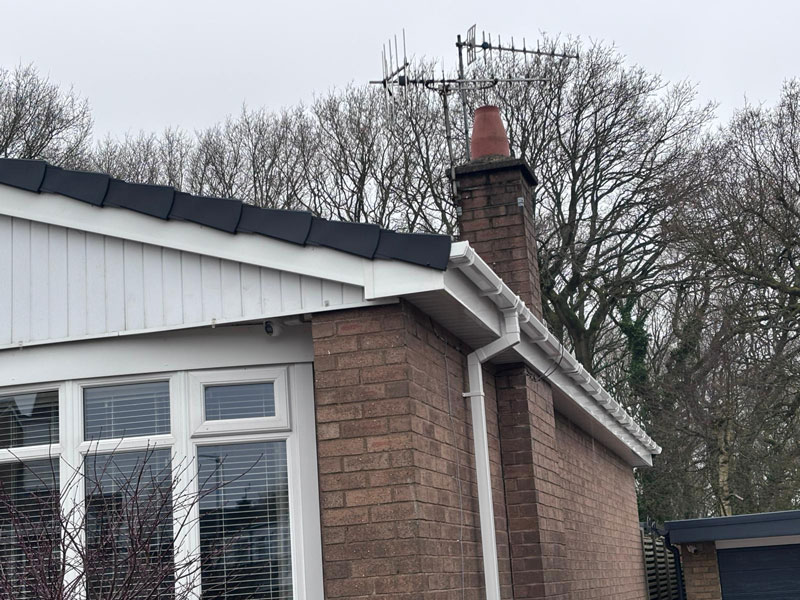
When homeowners think about roof maintenance, most immediately picture tiles, gutters, or chimney repairs. However, some of the most important components protecting your property are often overlooked — your fascias and soffits. These elements sit quietly at roof level, doing an essential job that many people only notice once something goes wrong.
As experienced roofing professionals working across Staffordshire, we regularly see preventable damage caused by neglected fascias and soffits. Proper maintenance not only protects your roofline but also prevents costly structural repairs, pest infestations, and damp problems inside your home.
In this article, we’ll explain exactly why fascias and soffits matter, what happens when they fail, how to spot early warning signs, and why birds and pests are particularly attracted to damaged rooflines.
1. Why Homes Have Fascias and Soffits
To understand their importance, it helps to know what fascias and soffits actually do.
What is a fascia?
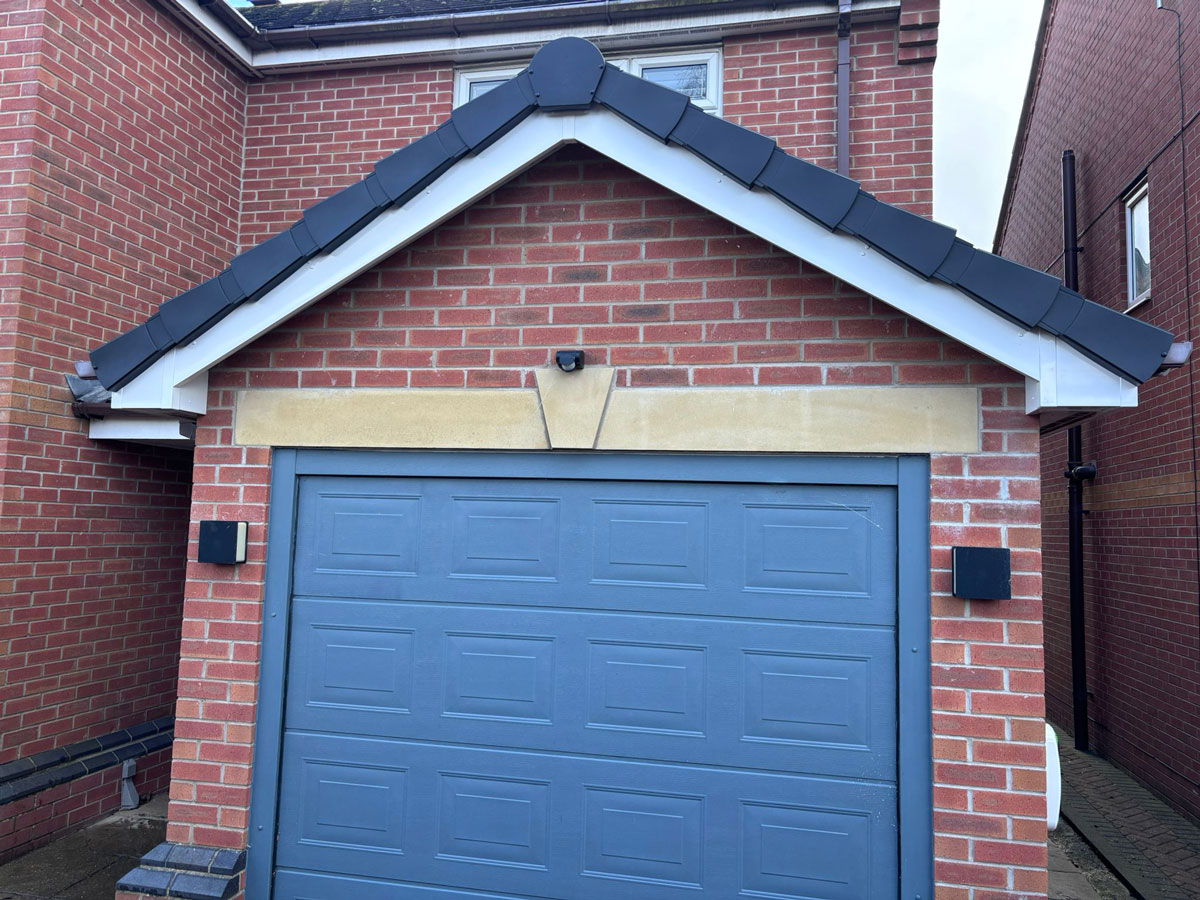
The fascia board runs horizontally along the lower edge of your roof, directly beneath the roof tiles. It is the long straight board you see where your guttering is attached. Fascias serve several key purposes:
- Supporting the guttering system – Gutters rely on fascias for structural support, especially during heavy rainfall when they hold significant water weight.
- Protecting roof timbers – Fascias form a barrier between the outside elements and the wooden roof structure.
- Creating a neat roofline finish – They give your property a clean, finished appearance.
What is a soffit?
The soffit sits underneath the fascia, bridging the gap between the outer wall and the roof edge. When you stand next to your home and look up, the soffit is the flat or slightly angled panel beneath the roof overhang.
Soffits are not just decorative — they perform crucial functions:
- Ventilation – Many soffits contain vents that allow airflow into the roof space, preventing condensation build-up.
- Moisture control – Proper airflow reduces damp, mould, and timber rot in loft areas.
- Protection against weather and pests – Soffits close off exposed roof rafters and prevent entry points into your attic.
Together, fascias and soffits form what roofers call the roofline system. Without them, your roof would be exposed to moisture, wind, and wildlife intrusion.
2. What Issues Arise When Fascias and Soffits Degrade or Fail
Because fascias and soffits are constantly exposed to the British weather — rain, frost, wind, and UV exposure — they naturally deteriorate over time, especially older timber installations.
When they begin to fail, problems escalate quickly.
Water ingress and rot
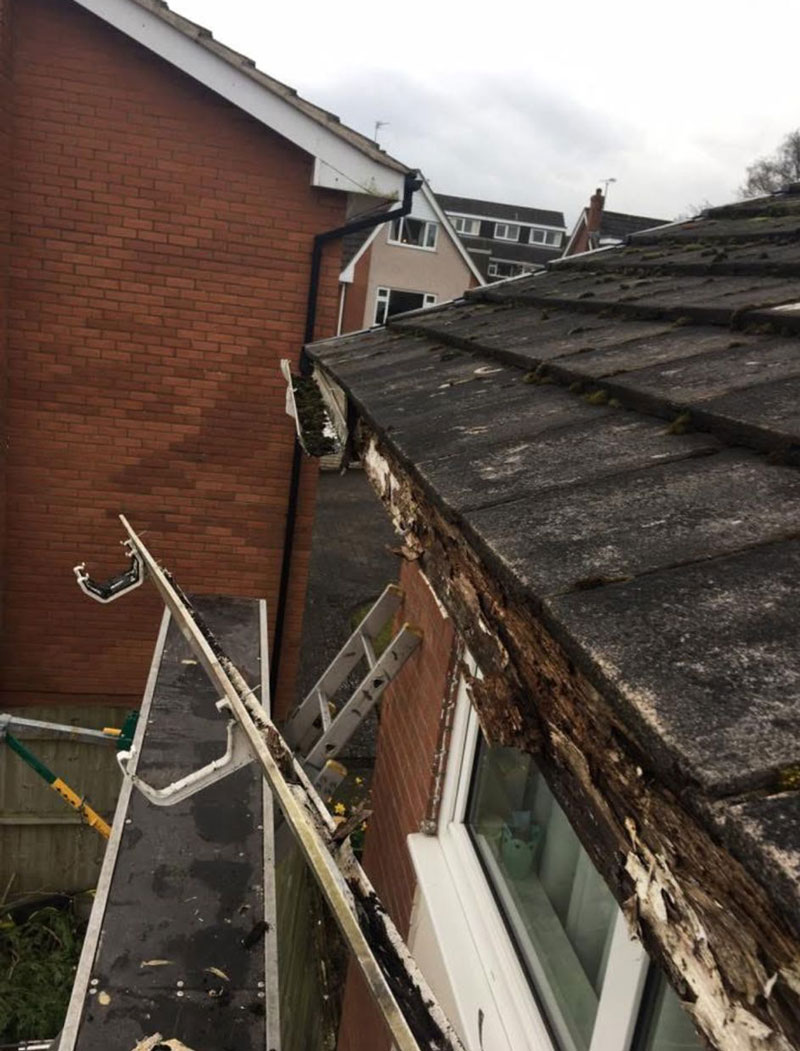
One of the most common issues we encounter in Staffordshire homes is water penetration caused by weakened fascias. When boards rot or crack:
- Rainwater can seep behind guttering.
- Moisture reaches roof rafters and internal timbers.
- Structural decay begins unnoticed.
Timber rot spreads silently and can compromise the strength of your roof structure long before visible damage appears indoors.
Gutter failure
Since gutters rely on fascia boards for support, deteriorating fascias often lead to:
- Sagging gutters
- Leaks at joints
- Complete gutter detachment during storms
Once gutters fail, rainwater pours directly down external walls, increasing the risk of damp penetration, stained brickwork, and foundation issues.
Poor roof ventilation
Blocked or damaged soffits reduce airflow into the loft space. Without proper ventilation:
- Condensation forms on cold surfaces.
- Insulation becomes damp and ineffective.
- Mould growth develops.
- Timber rafters begin to decay.
Many homeowners mistakenly blame roofing materials when condensation problems are actually caused by failed soffit ventilation.
Increased heating costs
Moist insulation loses its thermal efficiency. This means your home struggles to retain heat, forcing your heating system to work harder during colder months — something especially noticeable during Staffordshire winters.
Structural deterioration
Left untreated, fascia and soffit failure can lead to:
- Damaged roof rafters
- Compromised eaves structure
- Internal damp patches
- Ceiling staining
At this stage, repairs move from routine maintenance to major roofing work, significantly increasing costs.
3. What to Look Out For: Signs Your Fascias and Soffits Are Failing
The good news is that fascia and soffit problems usually provide warning signs before serious damage occurs. Knowing what to look for allows homeowners to act early.
Visible exterior warning signs
Walk around your property and check for:
- Peeling paint or flaking surfaces – Often the first sign of moisture penetration.
- Cracks or splits in boards – Allow water and pests to enter.
- Sagging guttering – Indicates weakened fascia support.
- Discolouration or staining – Suggests prolonged water exposure.
- Gaps between roofline components – May result from warping or poor installation.
Timber fascias are particularly vulnerable after years of exposure without repainting or sealing.
Signs from inside the home
Problems are not always visible externally. Inside your property, watch for:
- Damp smells in the loft
- Condensation on roof timbers
- Mould growth near ceiling edges
- Water marks on upstairs ceilings or walls
- Increased cold drafts from roof level
These symptoms often indicate ventilation failure caused by damaged soffits.
Seasonal clues
Certain times of year reveal issues more clearly:
- Winter: Ice buildup or overflowing gutters may signal fascia movement.
- Autumn: Leaves trapped due to misaligned gutters can highlight structural weakness.
- Spring: Bird activity near roof edges often exposes hidden gaps.
Routine inspections twice a year — ideally spring and autumn — can prevent major repairs later.
4. How Birds and Pests Capitalise on Damaged or Poorly Fitted Fascias and Soffits
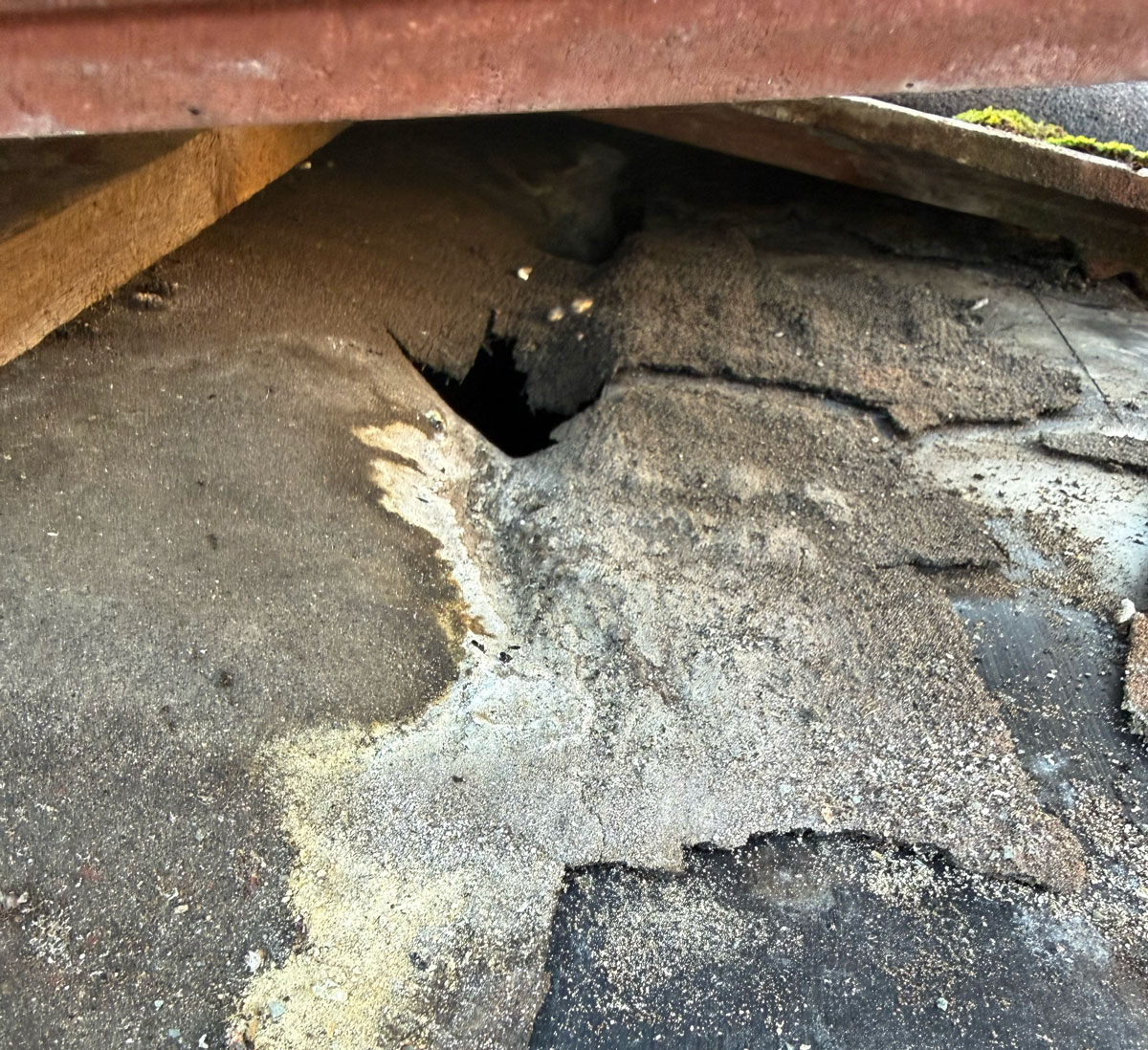
One of the most underestimated consequences of failing rooflines is pest intrusion. Small gaps created by deteriorating or incorrectly installed fascias and soffits provide perfect entry points for wildlife.
Why rooflines attract pests
The roof edge offers animals:
- Shelter from predators
- Warmth from household heat
- Dry nesting areas
- Easy access to loft insulation
Once access is gained, pests rarely leave voluntarily.
Common birds and pests we see in Staffordshire
Damaged fascias and soffits frequently attract:
- Birds nesting beneath eaves
- Squirrels chewing through weakened boards
- Wasps building nests inside cavities
- Mice and rats entering loft spaces
- Insects exploiting damp timber
Even a small opening is enough for rodents to squeeze through.
Damage caused by infestations
Pests don’t just occupy space — they actively cause damage:
- Birds pull away soffit materials to enlarge nesting areas.
- Squirrels gnaw timber and wiring, creating fire hazards.
- Wasps and insects accelerate timber decay.
- Rodents contaminate insulation and spread bacteria.
Once inside, removal becomes far more complicated and expensive than preventing access in the first place.
Poor installation increases risk
We often see newer homes suffering pest problems because fascia and soffit systems were poorly fitted. Common installation mistakes include:
- Missing ventilation grills
- Inadequate sealing
- Incorrect board alignment
- Low-quality materials
Professional installation ensures tight fitting, proper airflow, and pest-resistant protection.
Why Preventative Maintenance Matters
Fascias and soffits are a classic example of preventative maintenance saving significant money over time. Unlike roof tiles, problems with the roofline often go unnoticed until secondary damage appears.
Regular inspections and timely repairs help:
- Extend the lifespan of your roof
- Prevent damp and structural decay
- Maintain energy efficiency
- Protect against pest infestations
- Preserve your home’s appearance and value
Modern uPVC fascia and soffit systems are particularly popular because they require minimal maintenance compared to traditional timber options. However, even low-maintenance materials still benefit from periodic inspection and cleaning.
Final Thoughts
Your fascias and soffits may not be the most visible part of your home, but they play a vital role in protecting everything beneath your roof. Acting as both a structural support and protective barrier, they defend your property against moisture, ventilation problems, and unwanted wildlife.
Ignoring early warning signs can lead to escalating issues — from leaking gutters and damp lofts to costly structural repairs and pest infestations. The good news is that most fascia and soffit problems are entirely preventable with routine maintenance and professional assessment.
If you haven’t checked your roofline recently, now is the ideal time. A simple inspection today could prevent major roofing expenses tomorrow — and ensure your Staffordshire home remains dry, secure, and well-protected for years to come.