Expert advice from professional roofers serving Staffordshire homeowners
When people think about roofing, they often focus on tiles, slates, or chimney repairs. However, one of the most important — and most overlooked — parts of any roofing system is the guttering and downpipe network. Gutters and downpipes quietly protect your property every day by directing rainwater safely away from your roof, walls, and foundations.
In Staffordshire and across the Midlands, where rainfall is frequent and seasonal weather can be unpredictable, properly functioning gutters are not a luxury — they are a necessity. Neglecting them can lead to expensive structural damage, damp issues, and avoidable repairs.
In this guide, we’ll explain why gutters and downpipes matter, what happens when they fail, how homeowners can maintain them, and when replacement gutters becomes the smartest option.
1. Why Do We Need Gutters and Downpipes?
At their core, gutters and downpipes perform one critical job: controlling rainwater.
Every time it rains, hundreds of litres of water can land on the average roof. Without a drainage system to manage this volume, water would simply cascade off the roof edges and collect around the base of the property. Over time, this would cause serious damage.
Protecting Your Foundations
One of the main purposes of guttering is to channel rainwater away from your home’s foundations. When water repeatedly saturates the ground around a property, it can weaken soil stability and contribute to foundation movement. This is particularly important in areas with clay-heavy soils, which expand and contract depending on moisture levels.
Properly installed downpipes carry water safely to drains or designated runoff areas, preventing long-term structural risks.
Preventing Damp and Water Ingress
Rainwater running down external walls can seep into brickwork and mortar joints. Over time, moisture penetrates inside walls, leading to:
- Internal damp patches
- Peeling paint or wallpaper
- Mould growth
- Damage to plaster and insulation
Functional gutters prevent water from constantly soaking exterior surfaces, significantly reducing the risk of damp-related problems.
Preserving Roof Structure
Gutters also protect the roof itself. When water cannot drain properly, it can back up beneath roof tiles or along fascia boards. This can cause timber rot, deterioration of roof components, and even leaks inside loft spaces.
Protecting Landscaping and Exterior Features
Without controlled drainage, rainwater can:
- Wash away soil and flowerbeds
- Damage paving and patios
- Cause erosion around pathways
- Create slippery surfaces near entrances
A well-maintained guttering system keeps water flowing exactly where it should go.
2. What Issues Arise When Gutters or Downpipes Are Blocked or Damaged?
When gutters fail, problems rarely stay small for long. Many homeowners only notice issues once visible damage appears — by which time repairs are often more costly.
Overflowing Water
Blocked gutters are typically caused by:
- Leaves and moss
- Twigs and debris
- Bird nests
- Roof sediment
When water cannot flow freely, gutters overflow during rainfall. Instead of draining away, water spills directly down walls, soaking brickwork and window frames.
Damp and Mould Problems
Overflowing or leaking gutters are a leading cause of penetrating damp. Persistent moisture creates the perfect environment for mould growth, which not only damages property but can also affect indoor air quality and health.
Fascia and Soffit Rot
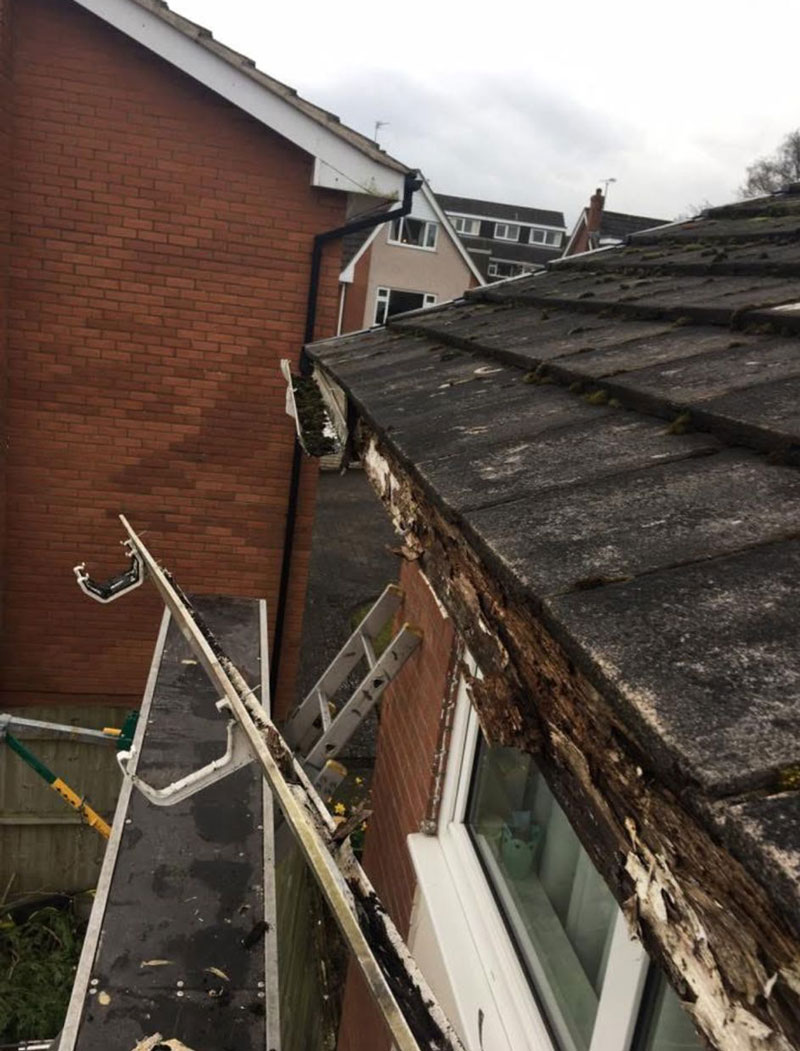
Fascia boards support guttering along the roofline. When gutters overflow or leak at joints, water constantly wets these timber elements. Over time, this leads to rot, weakening the support structure and sometimes causing gutters to detach entirely.
Foundation Damage
Water pooling around the base of a house can result in:
- Cracks in walls
- Subsidence risks
- Uneven flooring
- Structural movement
Many homeowners don’t realise that a relatively small gutter problem can eventually contribute to major structural repairs.
Ice Damage in Winter
During colder months, blocked gutters trap standing water. When temperatures drop, this water freezes and expands, potentially causing gutters to crack, joints to split, or brackets to fail under added weight.
Pest Infestations
Debris-filled gutters create ideal nesting conditions for birds, insects, and rodents. Standing water also attracts mosquitoes and accelerates organic decay, worsening blockages.
3. What Maintenance Can Homeowners Do?
The good news is that gutter problems are largely preventable. Regular maintenance dramatically extends the lifespan of guttering systems and prevents costly repairs.
Homeowners don’t need specialist skills for basic upkeep — just consistency and awareness.
Regular Visual Inspections
A simple inspection from ground level can reveal early warning signs:
- Sagging gutter sections
- Water stains on walls
- Plant growth inside gutters
- Dripping joints after rainfall
- Overflow during moderate rain
Checking gutters at least twice a year — ideally in spring and autumn — helps catch issues early.
Clearing Debris
Leaves and moss are the most common causes of blockages, particularly in areas with nearby trees.
Homeowners can safely clear debris using:
- A stable ladder (with assistance if possible)
- Gloves and a scoop or small trowel
- A garden hose to flush remaining dirt
If access is difficult or the property is more than one storey high, professional cleaning is strongly recommended for safety.
Checking Downpipes
Even if gutters look clear, downpipes may still be blocked. Signs include water backing up or spilling over at one point.
You can test flow by running water through the gutter and confirming it exits freely at ground level.
Inspecting Joints and Brackets
Over time, expansion and contraction from weather changes can loosen fittings. Ensure:
- Brackets remain securely attached
- Joints are sealed and not dripping
- Gutters maintain a slight slope toward downpipes
A level gutter may look neat but won’t drain correctly.
Installing Gutter Guards
Gutter guards or leaf protectors can significantly reduce debris buildup, especially in heavily wooded areas. While not maintenance-free, they reduce cleaning frequency and help maintain water flow.
Roof Maintenance Matters Too
Moss buildup on roofs often ends up inside gutters. Periodic roof cleaning helps prevent recurring blockages and improves overall drainage performance.
4. When Should Gutters and Downpipes Be Replaced?
Even well-maintained guttering does not last forever. Knowing when repairs are no longer enough can save homeowners from ongoing problems.
Age of the System
Typical lifespans vary depending on materials:
- uPVC gutters: 20–30 years
- Aluminium systems: 30+ years
- Cast iron gutters: 40–50 years (with maintenance)
If your guttering is approaching these ages, replacement may be more cost-effective than repeated repairs.
Frequent Leaks or Repairs
If joints continually fail or sections require repeated patching, this often indicates overall system deterioration. Modern replacement systems offer improved durability and efficiency.
Visible Cracks or Warping
Cracks allow water to escape before reaching downpipes. Warped gutters prevent proper drainage, leading to standing water and overflow.
These issues usually worsen over time and rarely provide reliable long-term fixes.
Sagging or Pulling Away from the Roof
When gutters begin detaching from fascia boards, structural support may already be compromised. This can pose safety risks as well as drainage failure.
Persistent Damp Issues
If damp problems remain despite repairs elsewhere, faulty guttering may be the underlying cause. Upgrading the system often resolves moisture problems that internal treatments alone cannot fix.
Renovations or Roof Replacement
Whenever a new roof is installed, it’s wise to assess guttering at the same time. Installing new gutters alongside roofing work ensures compatibility and prevents future access costs.
Final Thoughts: Small System, Big Protection
Gutters and downpipes may not be the most noticeable part of your home, but they are among the most important. They quietly defend your property against water damage every time it rains — and in Staffordshire’s climate, that’s often.
Neglecting gutter maintenance can lead to damp, structural problems, and expensive repairs that far outweigh the cost of routine care. By carrying out simple inspections, clearing debris regularly, and recognising when replacement is necessary, homeowners can protect both their property and their investment for decades to come.
If you’re unsure about the condition of your guttering, a professional free inspection can provide peace of mind and identify issues before they escalate. Preventative maintenance is always more affordable than reactive repair — and when it comes to rainwater management, prevention truly is the key.